
Protecting Iowa Businesses Since 1979
Hawkeye Fire & Safety designs, installs, and services fire suppression systems. Each system below includes what it protects, when it may need an upgrade, and how often it has to be inspected in Iowa.
Start Fire Suppression System Quote Today
We’re here to help. Get in touch to maintain compliance and reduce safety risks to personnel and equipment.
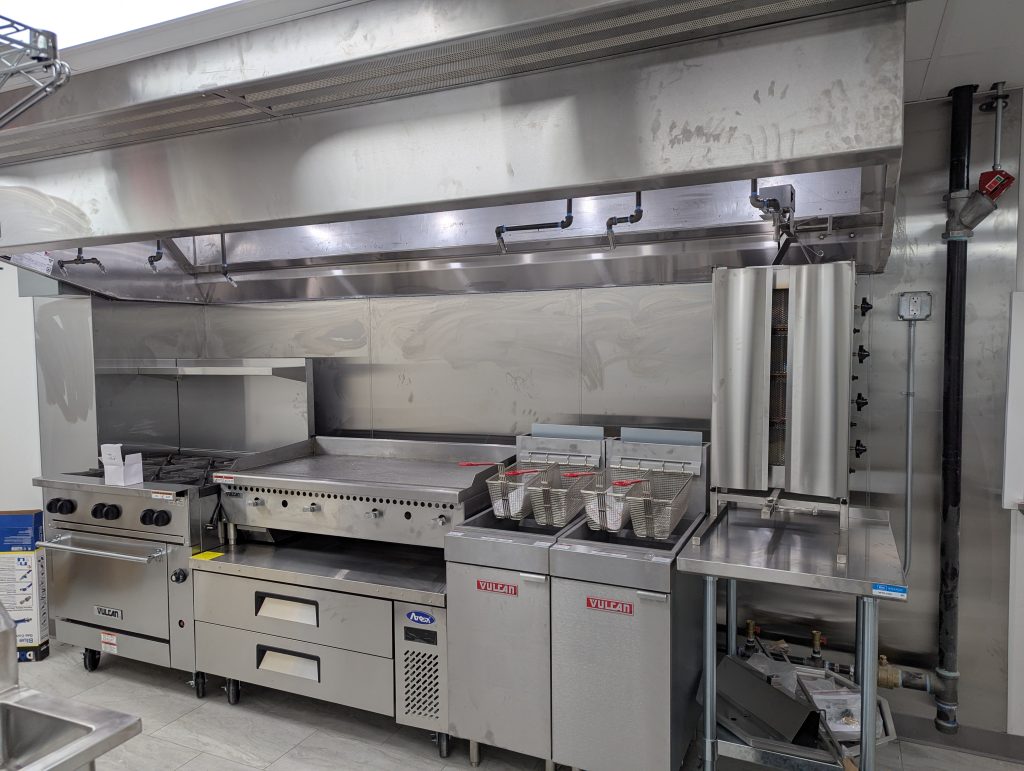
Restaurant Fire Suppression Systems
A wet chemical system protects cooking appliances, the hood, and the exhaust duct. When it activates, it discharges agent onto the fire and shuts off gas and electric supply to the cooking line.
The agent cools hot cooking oil and forms a foam layer over the surface so the fire does not flash back.
Gas and electric supply to the cooking appliances shuts off when the system discharges.
Systems are designed and installed to the listing and standard used for commercial cooking protection.
When Does a Kitchen System Need an Upgrade?
Pre-1994 dry chemical systems: Kitchen systems installed before UL 300 took effect in 1994 do not meet current requirements and need to be replaced with a wet chemical system.
Appliance changes: Adding, moving, or replacing an appliance, such as adding a fryer or charbroiler, requires a review of nozzle coverage. New nozzles or piping may be needed.
Cylinder age: Agent cylinders need a hydrostatic test every 12 years.
Discontinued equipment: Older system models with limited replacement parts may need to be replaced to stay in service.
Inspection Frequency in Iowa
Iowa adopts the International Fire Code, which requires commercial kitchen suppression systems to be serviced at least every six months by a trained technician.
Monthly: Visual check by staff (gauge, pull station, nozzle caps in place)
Every 6 months: Full service and fusible link replacement
Every 12 years: Hydrostatic test on agent cylinders
What Hawkeye checks for: appliance layout against nozzle coverage, fusible links, nozzle caps, the gas shutoff valve, the manual pull station, and cylinder test dates.
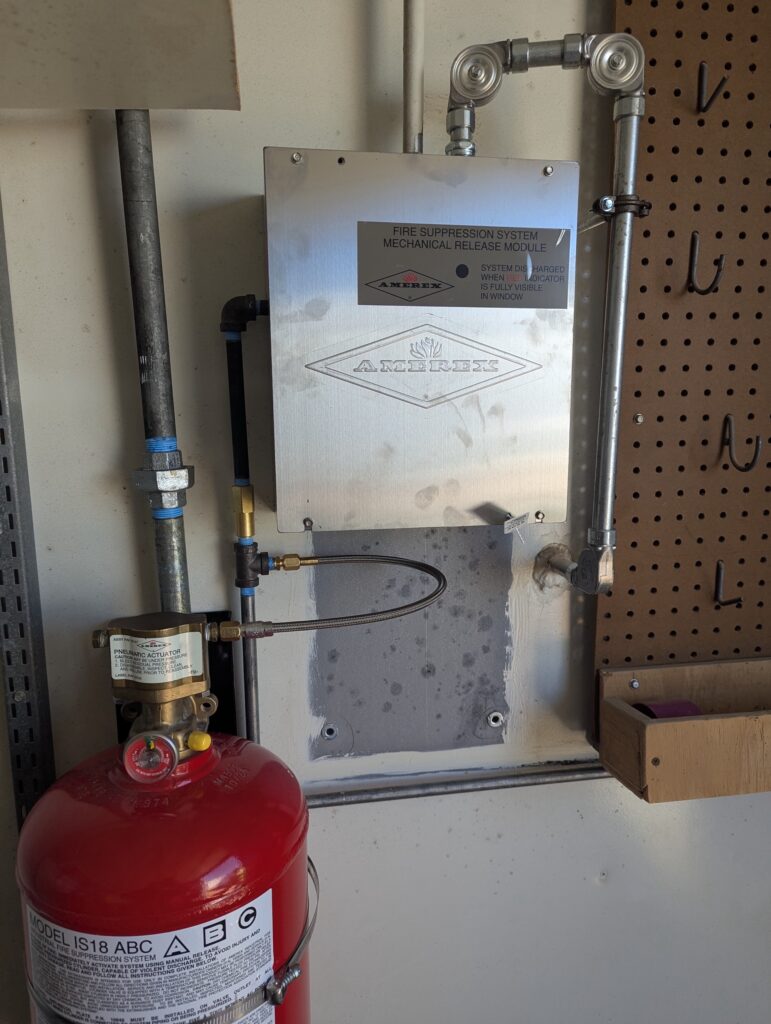
Industrial Dry Chemical Fire Suppression Systems
Industrial dry chemical systems protect areas where flammable liquids and vapors are present. When the system activates, it discharges agent and triggers connected shutdowns and alarms.
System Benefits
Dry chemical interrupts the combustion process in flammable liquid and vapor fires.
The system can shut down ventilation, spray equipment, and power, and activate alarms when it discharges.
Heat detection activates the system whether or not anyone is in the area.
When Does an Industrial System Need an Upgrade?
Hazard changes: Enlarging a spray booth, expanding a storage room, or bringing in different chemicals changes the design basis. The system needs to be re-evaluated.
Missing interlocks: Older systems may not be tied into ventilation shutoff, spray equipment, or the building alarm.
Agent condition: Dry chemical that has caked must be discarded and the system recharged.
Cylinder age: Stored-pressure systems need an internal examination every 6 years and agent containers need a hydrostatic test every 12 years.
Inspection Frequency in Iowa
Iowa’s adopted fire code refers to NFPA 17 for dry chemical systems, which requires maintenance at least every six months.
Monthly: Visual check by staff (pull station clear, seals and tag intact, gauge in range, nozzle caps in place)
Every 6 months: Full maintenance by a certified technician
Every 6 years: Internal examination (stored-pressure systems)
Every 12 years: Hydrostatic test on agent containers
What Hawkeye checks for: changes to the protected hazard, agent condition, detector and nozzle placement, and whether shutdowns and alarms operate when the system is tripped.
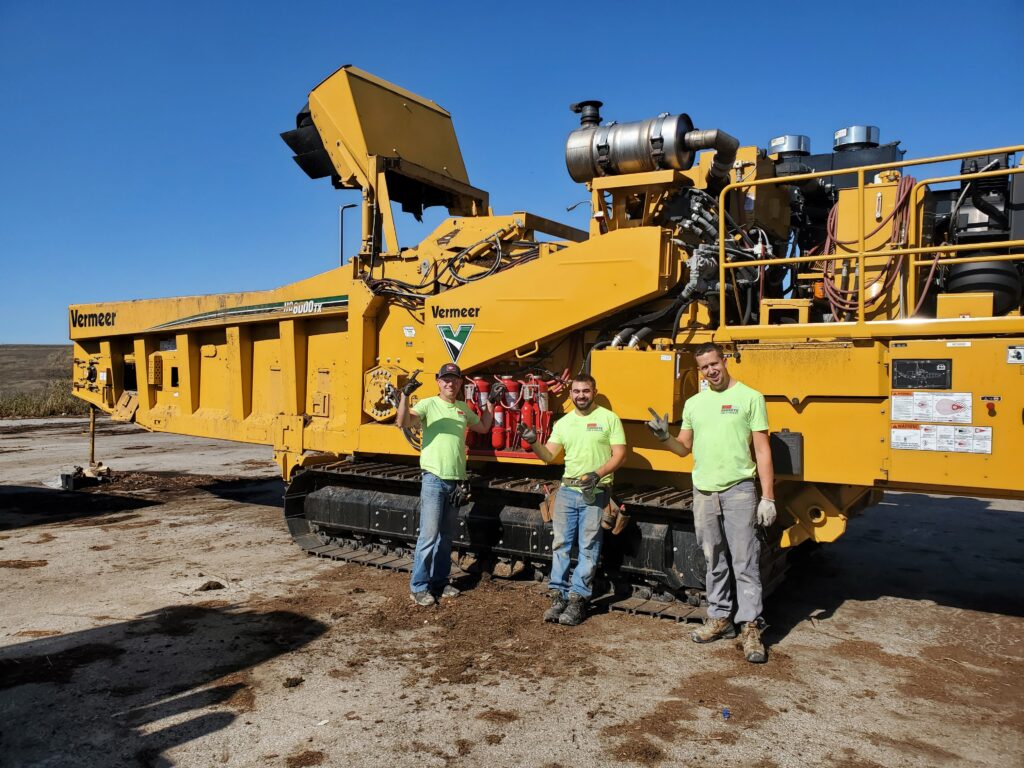
Vehicle Fire Suppression Systems
Vehicle systems protect engine compartments, turbochargers, hydraulic lines, and electrical components on heavy equipment. They detect and suppress fires automatically, with manual actuation available to the operator.
System Benefits
Automatic detection and discharge start suppression without relying on the operator to act first.
Side cartridge design allows the system to be recharged on site with basic hand tools.
Components are built to handle dust, vibration, and weather on equipment that works outdoors.
Systems We Service
Dry Chemical
Effective against Class A, B, and C fires. Used on most heavy applications.
Wet Agent
Cools hot surfaces to reduce the chance of re-ignition after the fire is out.
Dual Agent
Delivers rapid flame knockout alongside critical surface cooling, neutralizing complex fires.
When Does a Vehicle System Need an Upgrade?
Equipment changes: A rebuild, repower, or new attachment can move heat sources and hydraulic lines. Nozzle placement and detection need to be reviewed.
Transfers between machines: A system moved from a retired machine to a new one has to be redesigned for the new equipment.
Manual-only systems: Older systems without automatic detection or a circuit monitoring panel can be upgraded to detect and discharge on their own.
Tank age: Agent tanks need a hydrostatic test every 12 years.
Inspection Frequency in Iowa
Iowa’s building fire code does not set a separate schedule for mobile equipment. Manufacturers call for monthly inspection and maintenance at least every six months, more often for equipment in high-dust or high-hour use. Insurance carriers may require their own schedule.
Monthly: Operator visual check (actuator pin and seal intact, hoses secure, nozzle caps on, panel normal)
Every 6 months: Full maintenance by a certified technician
Every 12 years: Hydrostatic test on agent tanks
What Hawkeye checks for: detection line condition, hose and nozzle routing near hydraulics and turbochargers, agent condition, and whether the system still matches the machine after repairs or modifications.
Clean Agent Suppression Systems
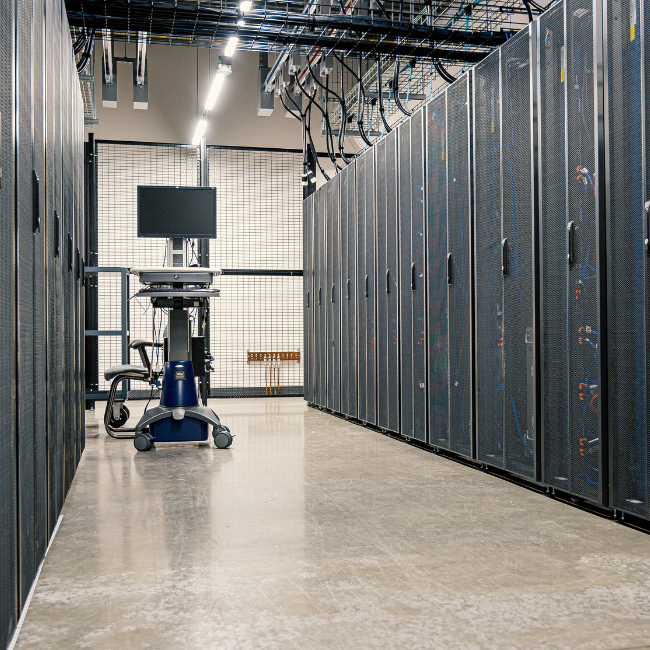
Clean agent systems fill an enclosed room with a gaseous agent that suppresses fire without water and leaves no residue on equipment or records.
System Benefits
Electronics, records, and equipment are not exposed to water, and there is no agent cleanup after discharge.
At design concentration, these agents are used in rooms where people work.
Systems discharge in 10 seconds or less.
Systems We Service
ECARO-25 (HFC-125)
Requires less agent per cubic foot than HFC-227ea, which reduces cylinder count for a given room size.
HFC-227ea / FM-200
Widely used replacement for Halon 1301 in data centers and telecommunications rooms.
When Does a Clean Agent System Need an Upgrade?
Halon 1301 systems: Halon production ended in 1994. Remaining Halon systems are candidates for replacement.
HFC phasedown: HFC-227ea and ECARO-25 are covered by the federal HFC phasedown that began in 2022 and runs through 2036. Existing systems can stay in service, but recharge costs are rising. A discharge or room expansion is the time to review agent options.
Novec 1230: 3M stopped producing Novec 1230 at the end of 2025. The same agent (FK-5-1-12) is still made by other manufacturers.
Room changes: New wall penetrations, a raised ceiling, or added floor space affect whether the room holds agent at the required concentration.
Inspection Frequency in Iowa
Iowa’s adopted fire code refers to NFPA 2001 for clean agent systems.
Monthly: Operator visual check (actuator pin and seal intact, hoses secure, nozzle caps on, panel normal)
Every 6 months: Full maintenance by a certified technician
Every 12 years: Hydrostatic test on agent tanks
What Hawkeye checks for: detection line condition, hose and nozzle routing near hydraulics and turbochargers, agent condition, and whether the system still matches the machine after repairs or modifications.
Why Choose Hawkeye Fire & Safety
Hawkeye Fire & Safety is a locally owned fire protection company serving Iowa businesses from offices in Cedar Rapids and Iowa City. We handle fire suppression systems from the first site visit through every required inspection, so one team knows your system and its history.
Fire suppression is one part of protecting a commercial building. See our commercial fire protection services for extinguishers, emergency lighting, hydrostatic testing, and staff training.
We evaluate the hazard, whether it is a cooking line, spray booth, piece of equipment, or server room, and design a system that meets the applicable UL listing and NFPA standard.
Our technicians install the system, connect required shutdowns and alarms, and test it before it goes into service.
We perform semiannual service, track hydrostatic test dates, and recharge systems after a discharge. We tell you what is required now and what to plan for.